

Our Commitment to Product, People and the Environment
At Effe Soep, quality, craftsmanship and a passion for helping everyone enjoy a delicious cup of soup or broth are at the heart of everything we do. Caring for our products goes hand in hand with caring for people and the environment. In everything we do, we consider whether and how we can make it more sustainable. We may not have the scale of the major food manufacturers, but we are agile, highly motivated and always looking for ways to improve.
The honest truth is that we sometimes face difficult trade-offs. We do what we can within our sphere of influence. Our customers expect this from us, and we are committed to meeting those expectations. It reflects who we are as a business. Throughout our entire supply chain, we strive to add a meaningful touch of social responsibility to every cup of soup we produce. It simply makes it taste even better.
We focus on four key areas: Happy People, Responsibly Sourced Ingredients, Reduced Energy Use, and Less Packaging & Waste.
HAPPY PEOPLE
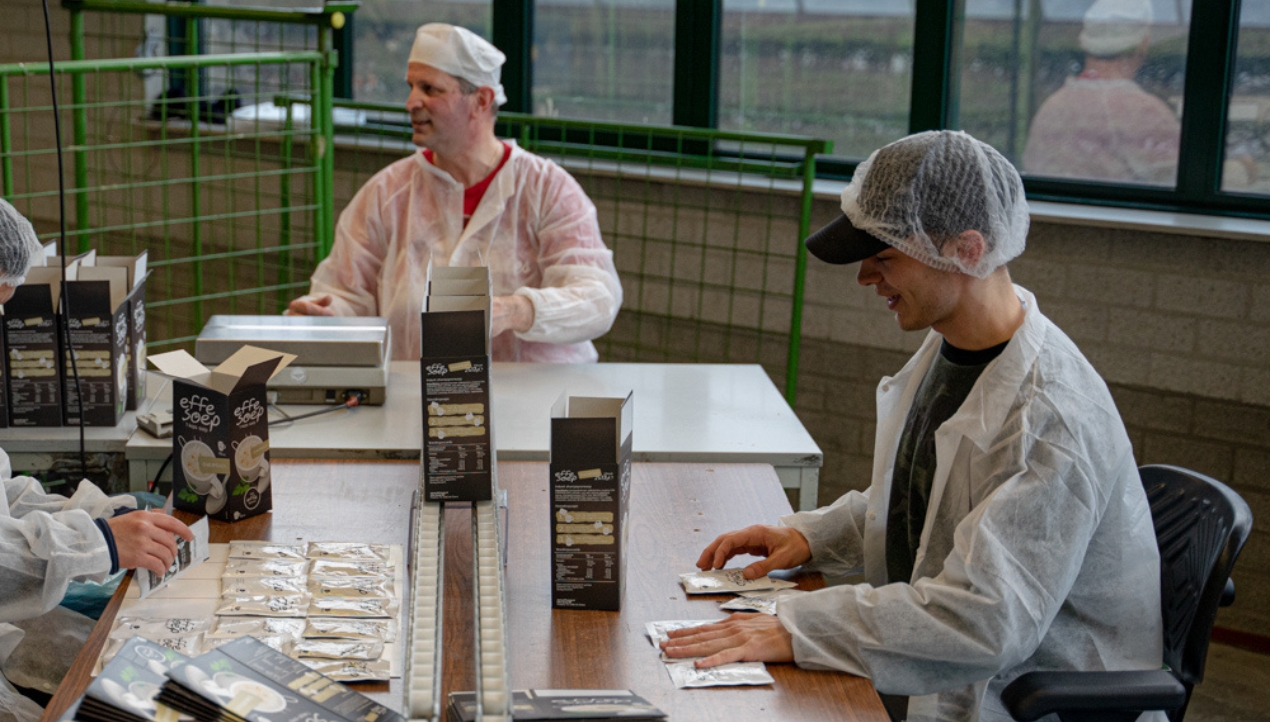
At Effe Soep, we’re passionate about making people happy. That applies not only to our customers but also to our suppliers and partners. We work closely with local suppliers in North Brabant to support the regional economy. We go one step further by choosing to have our products packed by INTOS.
INTOS is a social enterprise that provides meaningful employment opportunities for people who face barriers to entering the labour market. We believe everyone should have the opportunity to participate and contribute to society—and that creates plenty of smiling faces.


RESPONSIBLY SOURCED INGREDIENTS
To be honest, health is one of our biggest challenges. Because soup is a savoury snack, a certain amount of salt is essential to achieve the flavour our customers expect. Reducing it too much would compromise the taste. That said, ever since we launched in 2014, we’ve been committed to reducing the amount of salt in our recipes. We continue to look for new ways to do this, for example by using more herbs and spices instead of salt, making our soups even more flavourful. We also never use preservatives in our soups because, quite simply, they are unnecessary in dried soup products.
REDUCED ENERGY USE
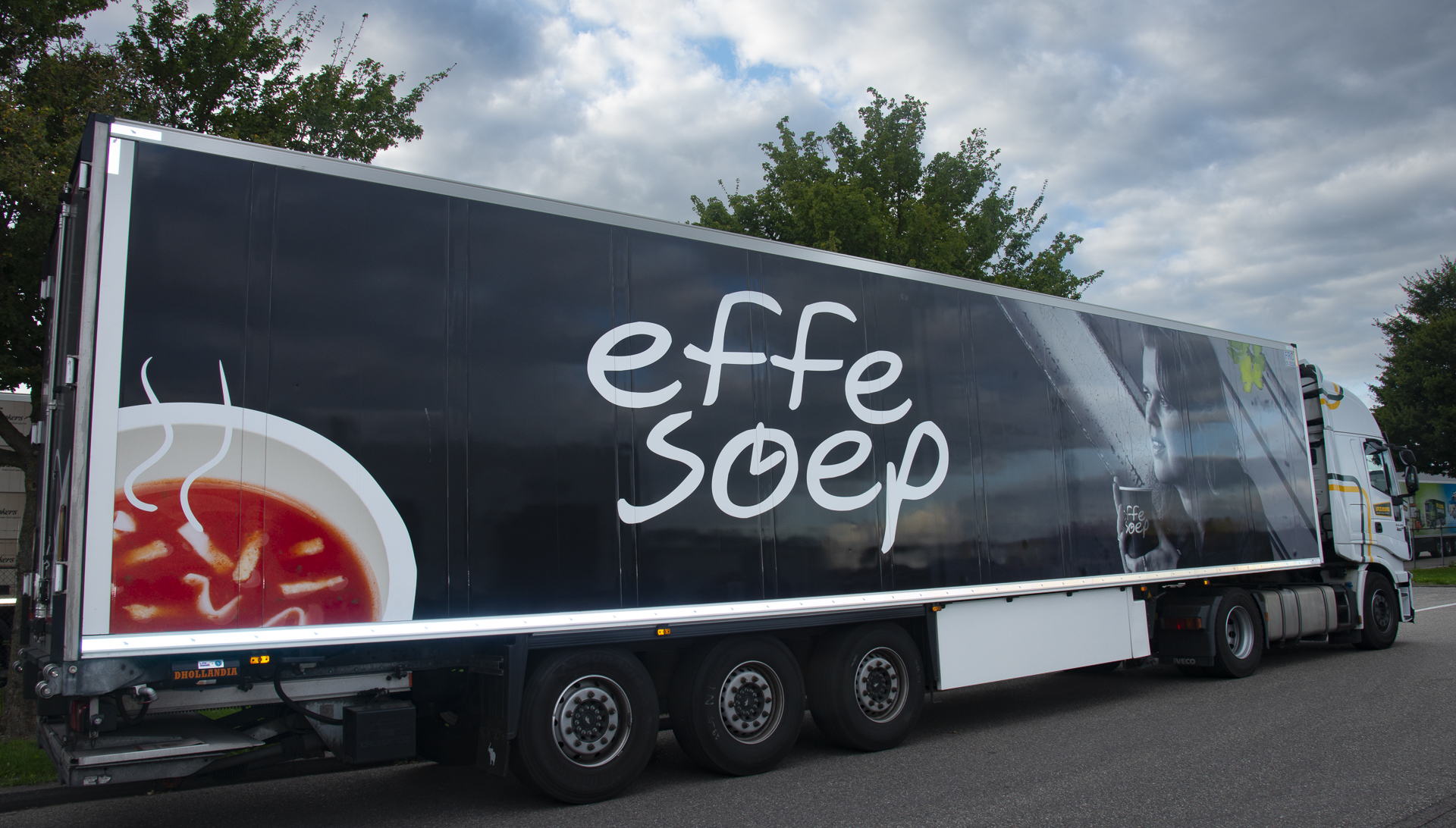
We aim to keep our environmental impact to a minimum. A significant proportion of our carbon emissions comes from transport, so we have chosen to work with regional suppliers for the production of our soups and broths. We also work with our customers to establish fixed delivery routes and minimum order quantities, enabling more efficient transport and reducing CO₂ emissions.
Sustainability was one of the key criteria when selecting our suppliers. Solar panels have been installed at our production facilities, meaning that a substantial part of our soups is produced using renewable electricity.
Our dried soups contain more than twenty different ingredients. Although we are in regular contact with our raw material suppliers, it is unfortunately not yet feasible to calculate the upstream carbon footprint of every individual ingredient in our supply chain.

LESS PACKAGING AND WASTE
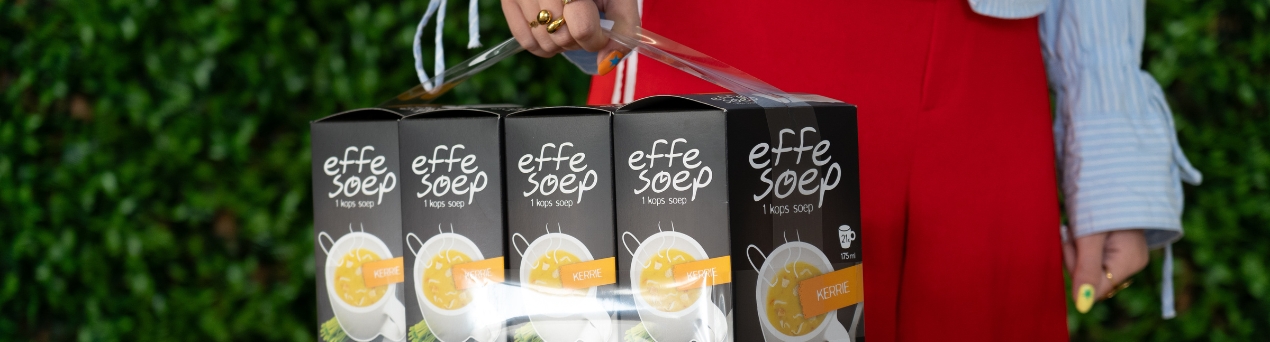
As a manufacturer, we have direct influence over the packaging we use and aim to minimise its environmental impact. All our cardboard packaging is FSC® or FSC® Mix certified. To reduce the amount of plastic we use, we replaced shrink wrap with paper sleeves in 2023. This not only saved hundreds of kilograms of plastic film but also the energy required to produce it.
For the display stands used for our single-serve soups and drinking broths, we deliberately chose wood instead of plastic. Wood is a more sustainable material and better reflects the authentic, artisanal character of Effe Soep. These displays are produced by Ambachtelijk Hout, another partnership that contributes to creating positive social impact.
By carefully aligning production with demand, we avoid unnecessary waste and ensure that no products have to be discarded.